Cormorant Beach Day Tour Itinerary: What to Expect
Journey Along Isabela’s Untamed West Coast
Your expedition begins in the early morning as we depart Puerto Villamil and navigate toward the remote western coast of Isabela Island — a journey of approximately 2 to 2.5 hours.
Far more than simple travel time, this navigation is an essential part of the experience itself. As we move along the coastline, the landscapes transform dramatically: white sand beaches and dry coastal vegetation slowly give way to lush green hills before transitioning once again into the striking volcanic scenery shaped by the eruptions of Cerro Azul, with visible lava flows and volcanic craters stretching across the horizon.
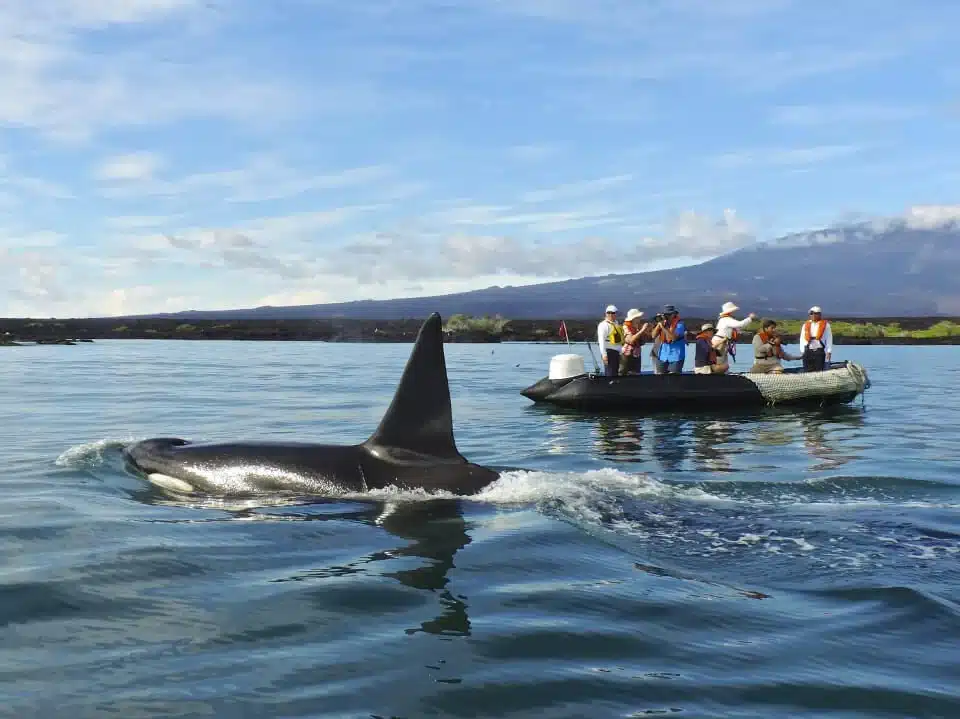
Breakfast is served on board as we search for wildlife along the way. Depending on the day, sightings may include Galápagos penguins, flightless cormorants, Nazca boobies, blue-footed boobies, frigate birds, dolphins, fur seals and occasionally even orcas. Guests are also welcome to participate in optional fishing during navigation — sometimes contributing directly to the freshly prepared lunch served later in the day.
Snorkeling & Exploration at Cormorant Beach
Upon arrival at Playa de los Cormoranes, we enter a sheltered bay of remarkably clear water, surrounded by volcanic coastline and almost entirely untouched by tourism. The calm lagoon creates ideal conditions for snorkeling while offering an extraordinary concentration of wildlife.
As you drift through the crystal-clear water, rays glide silently across the sandy bottom while schools of colorful reef fish move through the lava formations below. Curious sea lions often approach snorkelers playfully — a reminder of how rarely humans visit this remote part of Isabela. Sea turtles are commonly seen resting or feeding nearby, while octopus, lobsters and countless smaller marine creatures inhabit the cracks and crevices of the submerged lava.
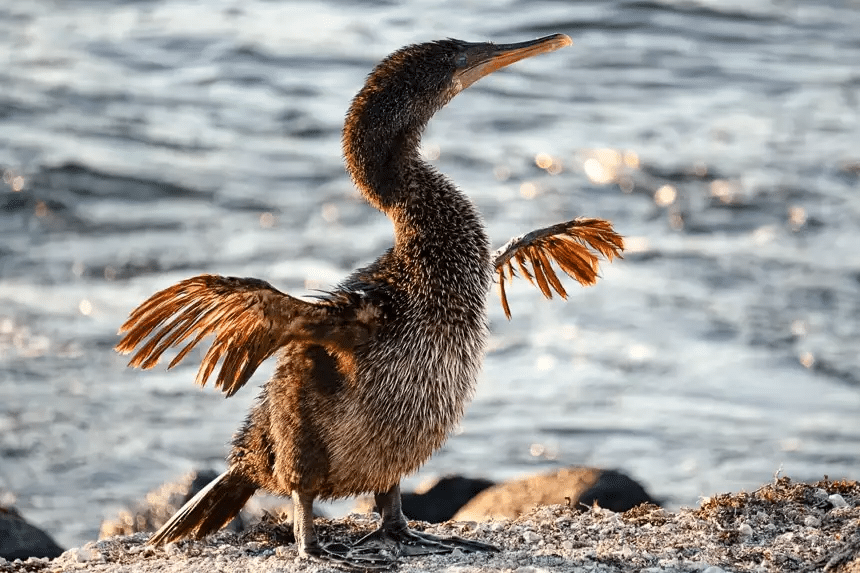
The true highlight, however, is the unique opportunity to observe Galápagos penguins and flightless cormorants in their natural habitat. Nesting directly along the rocky shoreline surrounding the lagoon, these iconic species can often be seen diving into the water in search of food before reappearing moments later along the lava rocks.
Following the snorkeling session, we continue exploring the surrounding lava fields formed by the volcanic activity of Cerro Azul and Sierra Negra. At first glance, the landscape may appear barren and lifeless, yet with every step the ecosystem slowly reveals itself. Small lagoons emerge between ancient lava flows, marine iguanas rest along the shoreline, blue-footed boobies and frigate birds circle overhead, while cormorants move carefully between the volcanic rocks. Fur seals and sea lions can often be found resting quietly near the water’s edge.
This walk offers a rare glimpse into the raw and unexpected side of the Galápagos — a landscape where life slowly establishes itself in one of the harshest volcanic environments imaginable. Let nature surprise you.