Cuatro Hermanos & Tortuga Island Snorkeling Tour Itinerary: What to Expect
Navigation & Birdwatching at Tortuga Island
The day begins at our agency, where we get you ready for a full day on the water. We fit your snorkeling equipment, make sure everything is comfortable, and then head to the port to board the boat.
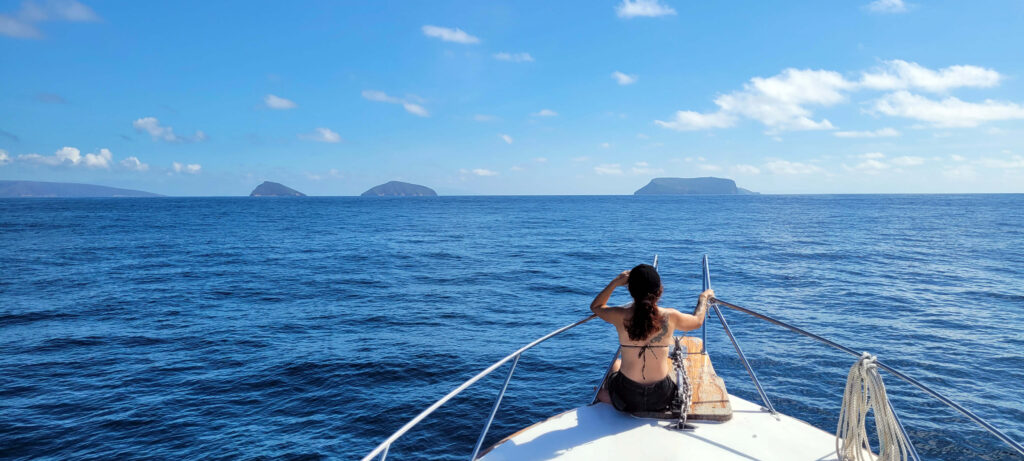
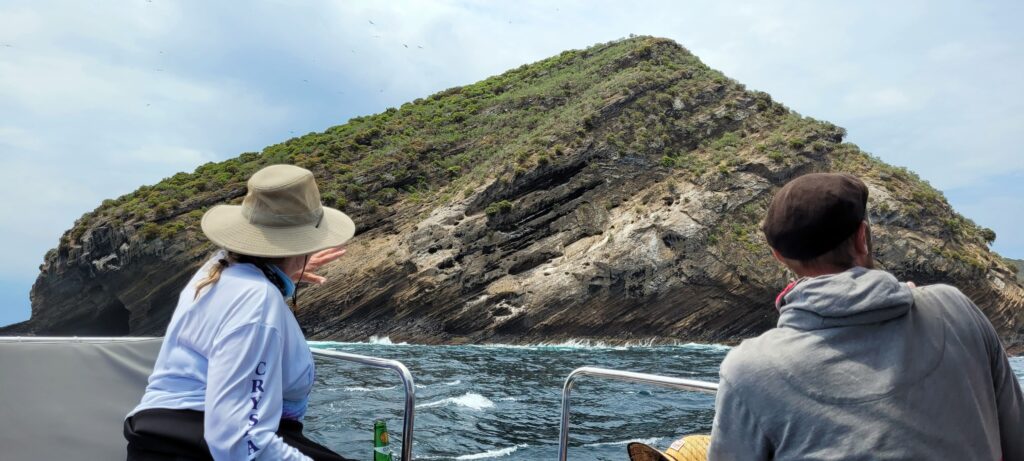
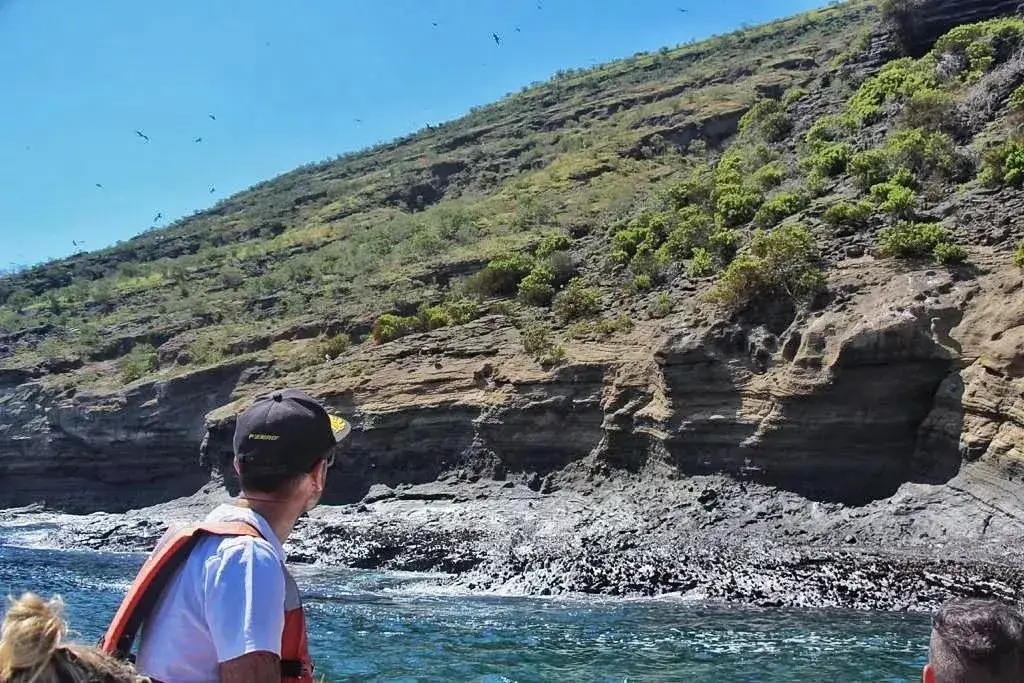
From Puerto Villamil, we navigate for around 30 minutes toward Tortuga Island, and this first stretch across the ocean already sets the tone for the day. As we approach the island, the landscape changes from open water to rugged volcanic cliffs covered with marine life.
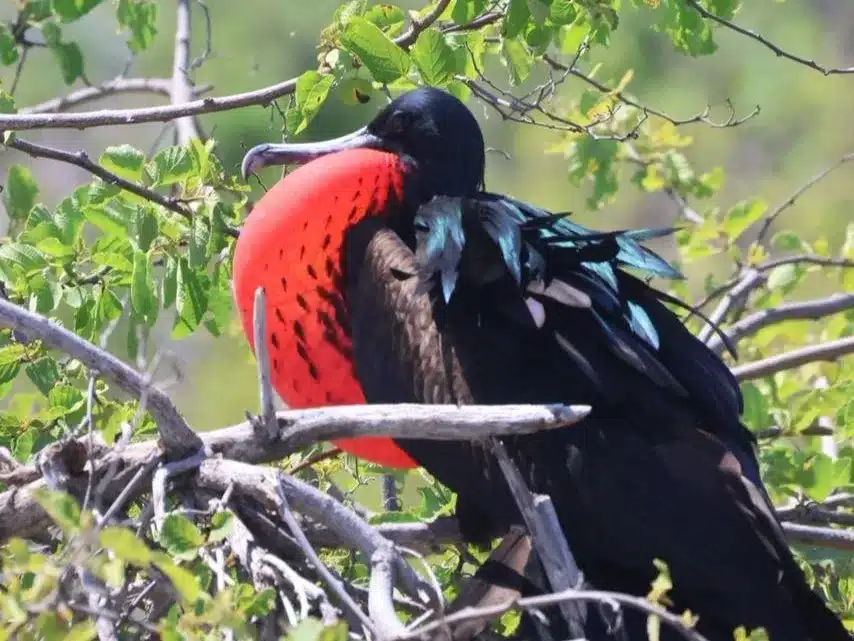
Tortuga is an important nesting and resting ground for an impressive variety of seabirds. Frigatebirds can be seen displaying their striking red throat pouches, while blue-footed boobies glide low over the ocean and sometimes pass directly alongside the boat. Nazca boobies tend to their nests and chicks among the rocks, while swallow-tailed and lava gulls move between the island and the water.
Keep watching the sky, too. Every now and then, a red-billed tropicbird appears, its long tail feathers making it one of the most beautiful birds you can encounter around Isabela. During the warmer months, migratory species such as Franklin’s gulls can add even more diversity to the birdlife.
The island itself is alive with marine iguanas, which cover the volcanic rocks and use the island as a nesting ground. Watching them move between the seabirds and volcanic formations gives you a wonderful first impression of how closely connected the marine and terrestrial ecosystems of the Galapagos are.
Once we have explored Tortuga and taken in its birdlife, it is time to turn our attention to what lies beneath the surface.
Deep-Water Snorkeling at Tortuga to find Hammerhead Sharks & Mantas
Before entering the water, your guide evaluates the conditions and gives you a safety briefing. The snorkeling around Tortuga takes place in a more exposed, deeper-water environment, so choosing the right place and understanding the conditions is particularly important. The underwater landscape slopes steeply away from the island and into the open ocean. This creates an exciting transition between the volcanic coastline and the deep blue, where smaller reef species can meet much larger pelagic animals.
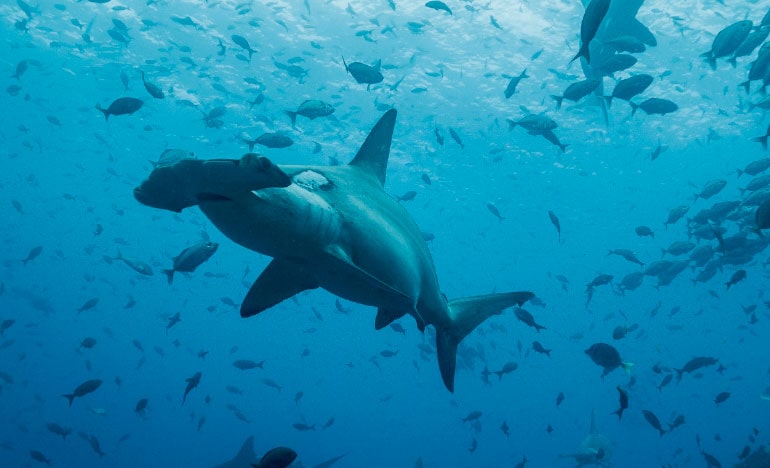
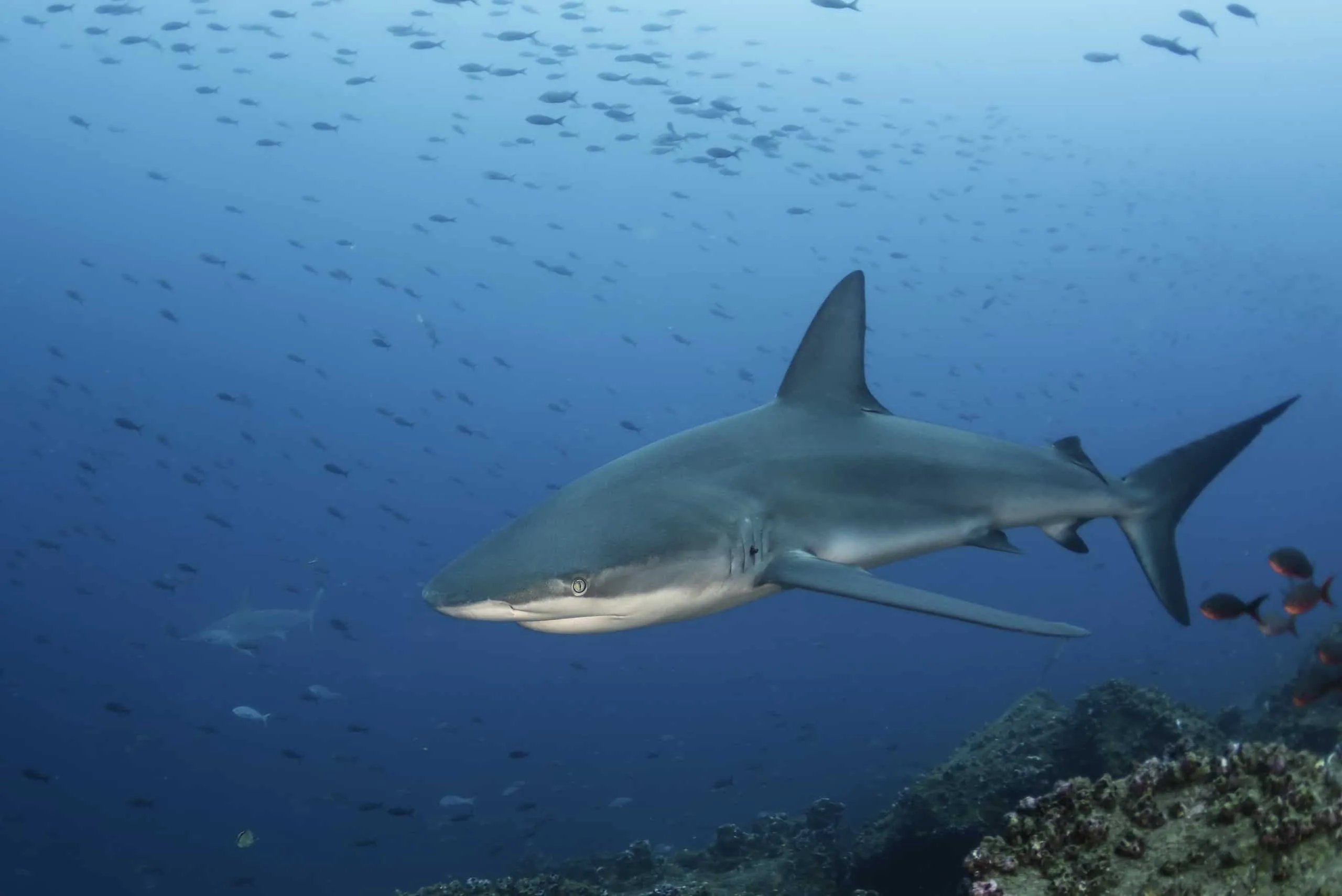
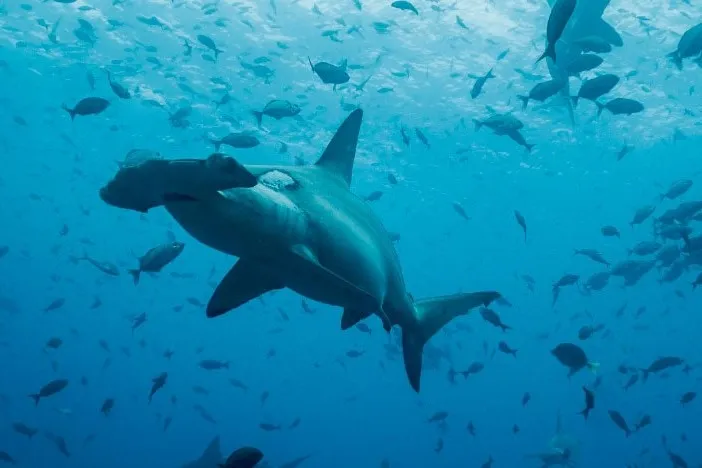
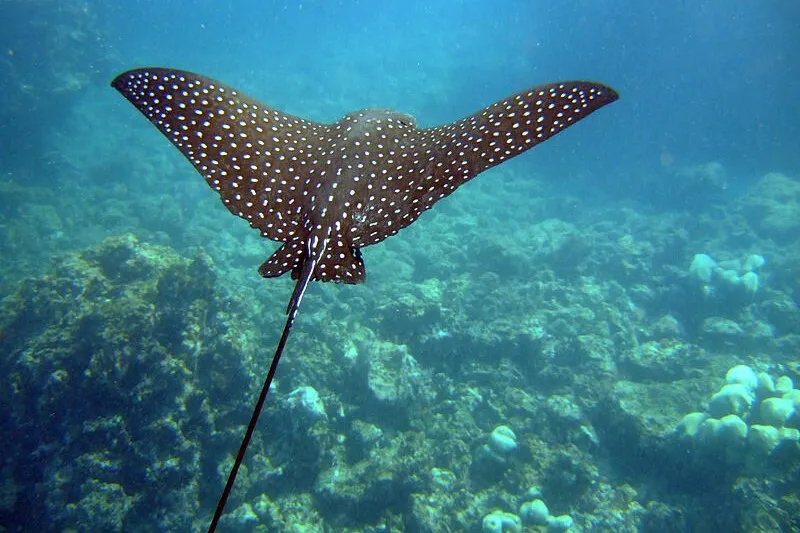
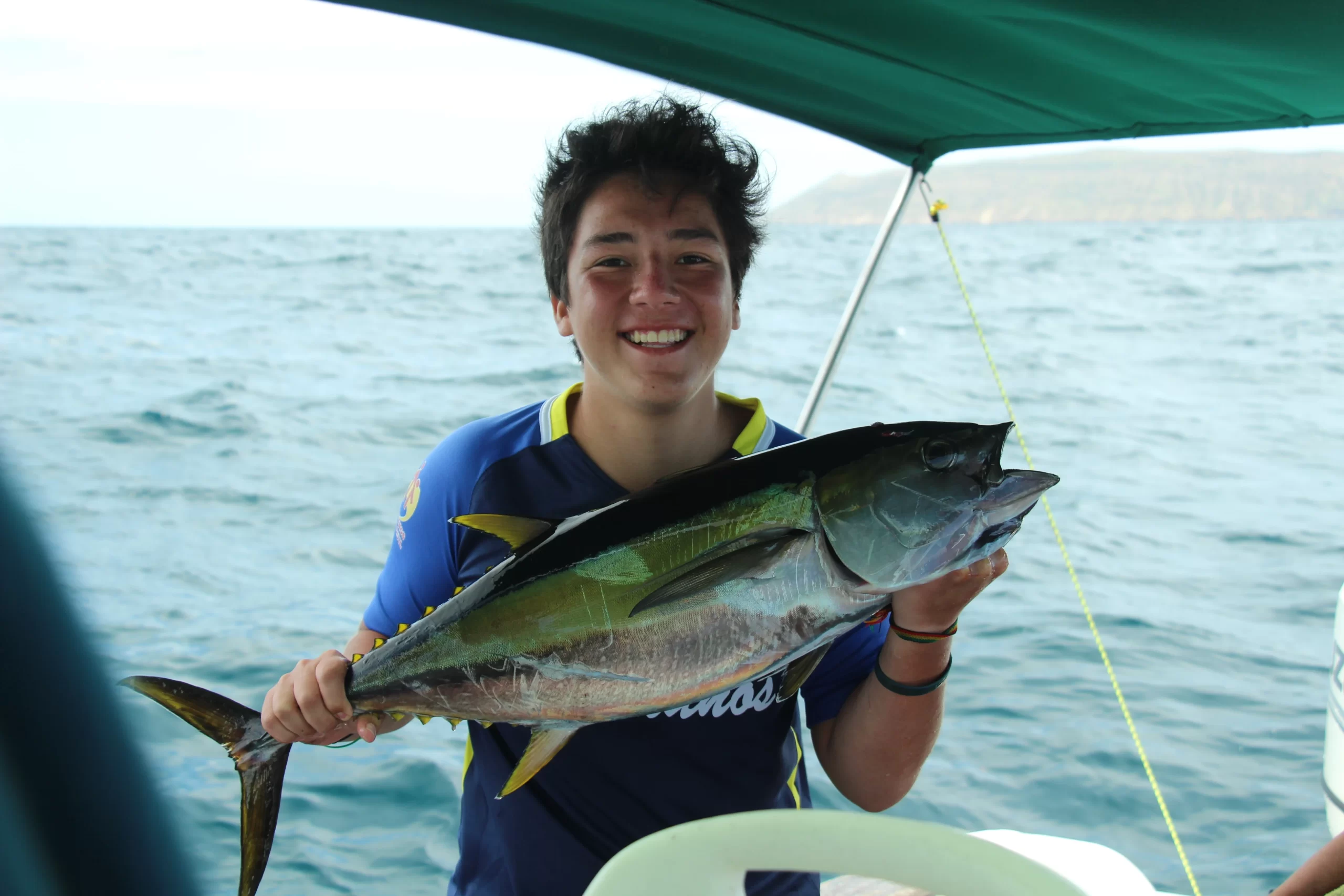
Once you enter the water, large schools of fish can surround you. Green sea turtles may appear around the rocky formations, while sea lions can suddenly join you in the water. Tuna and barracuda move through the schools, with groupers, parrotfish and other colorful reef species adding even more variety. But the real excitement comes when you look beyond the immediate reef and into the deeper blue. This is one of the environments around Isabela where you have the chance to encounter Galapagos sharks and hammerhead sharks, as well as blacktip and white-tip reef sharks. Eagle rays and giant manta rays can also pass through these waters.
Deep-water snorkeling is different from swimming over a shallow reef. There is a sense of anticipation because you never know what might appear from the blue. One moment you may be watching a turtle below you; the next, a large school of fish can move across your path or a shark can emerge from deeper water. Depending on the conditions and how the day develops, we may make up to two snorkeling immersions around Tortuga Island. Your guide will adapt the locations to the sea conditions, visibility and wildlife activity to make the most of the time available.
When you are not in the water, you can relax on the sun deck, continue watching the seabirds or simply enjoy the vast expanse of ocean surrounding the island. After our snorkeling at Tortuga, we continue toward Cuatro Hermanos.
Cuatro Hermanos: Volcanic Cave & the Open Blue
The navigation to Cuatro Hermanos takes around 45 minutes. As we leave Tortuga behind, keep your eyes on the open ocean. These waters are also home to larger marine species, and depending on the season and conditions, manta rays may glide through the blue or dolphins may appear alongside the boat. During the cooler months, there can also be opportunities to encounter pilot whales and other cetaceans.
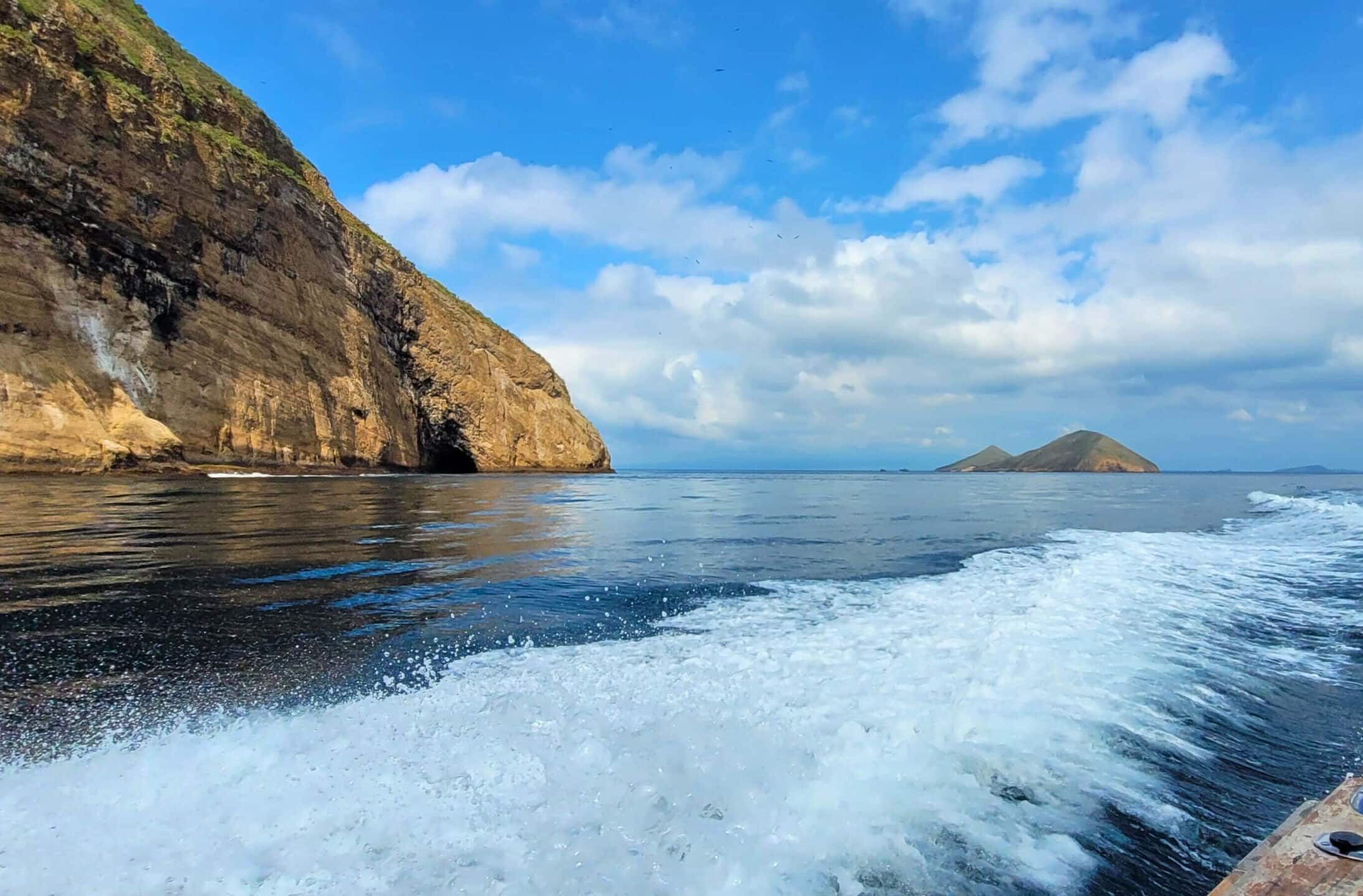
As Cuatro Hermanos comes into view, four volcanic islets rise dramatically from the ocean. We navigate around their formations before heading toward the largest of the four, where one of the most distinctive experiences of the day awaits: entering a large volcanic cave by boat. Seeing the impressive size of the cave from inside gives you a completely different perspective of the volcanic landscape. Then we prepare for our first snorkeling immersion, entering the water right at the cave.
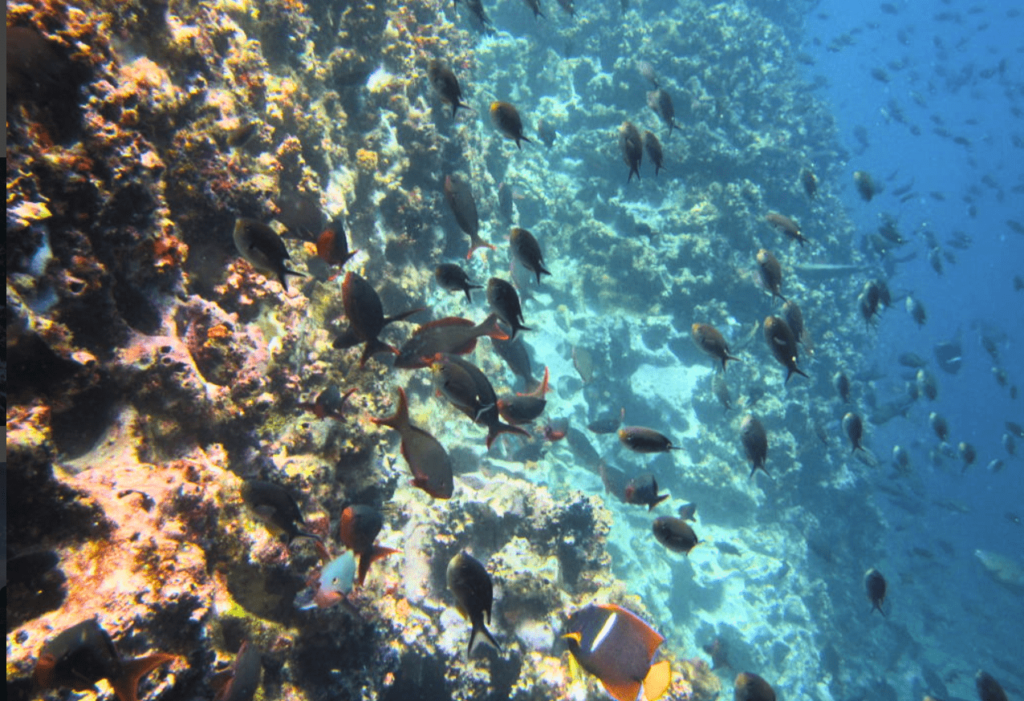
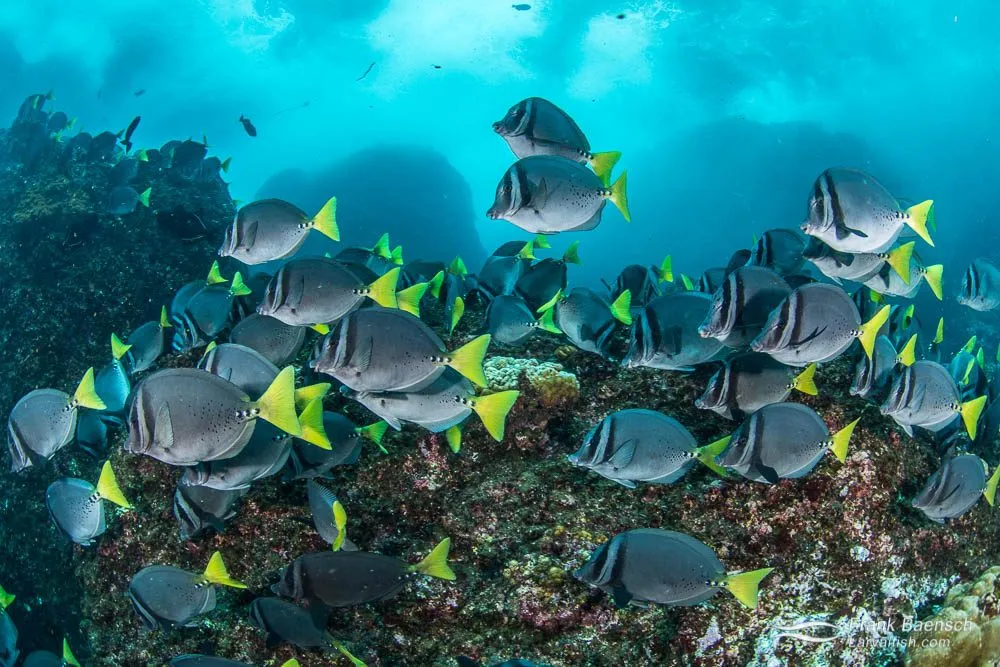
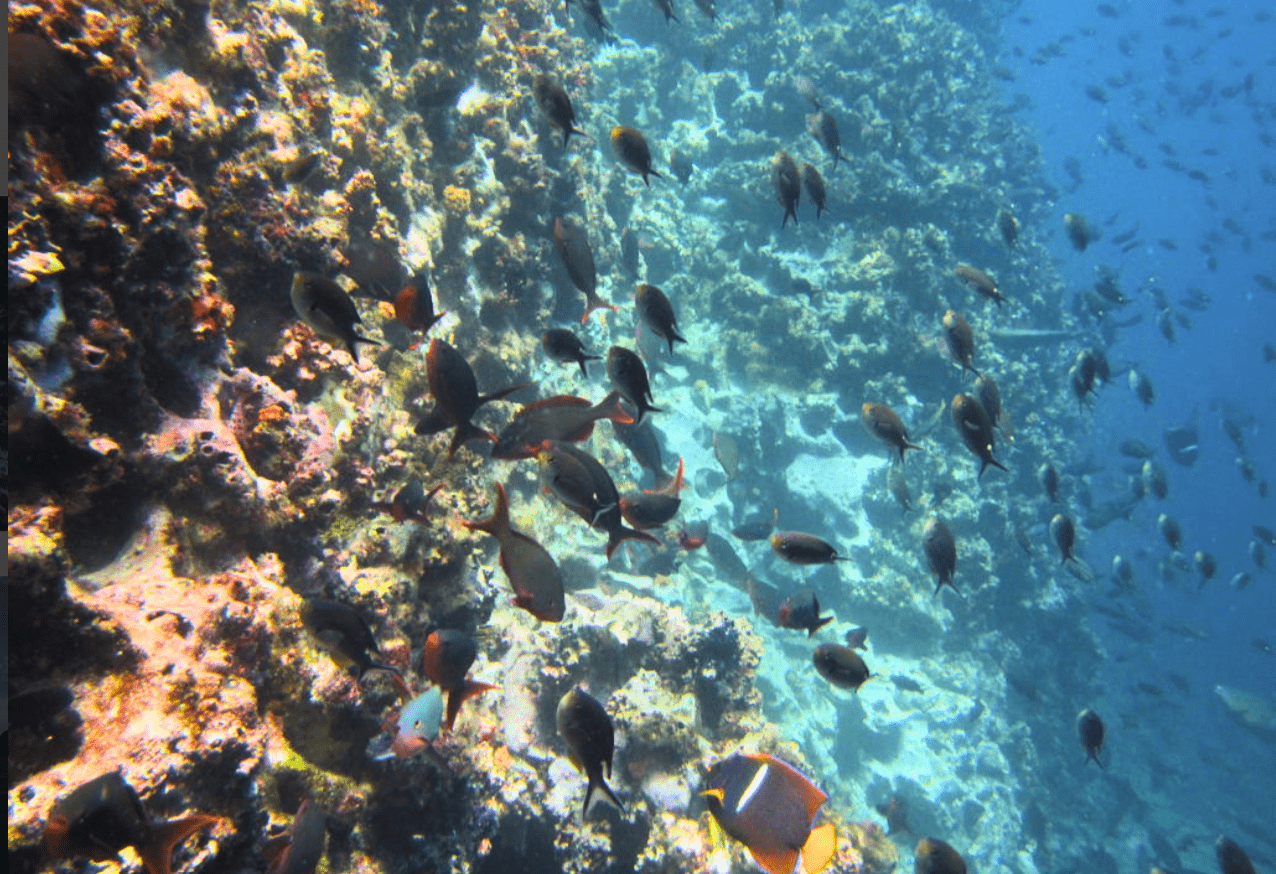
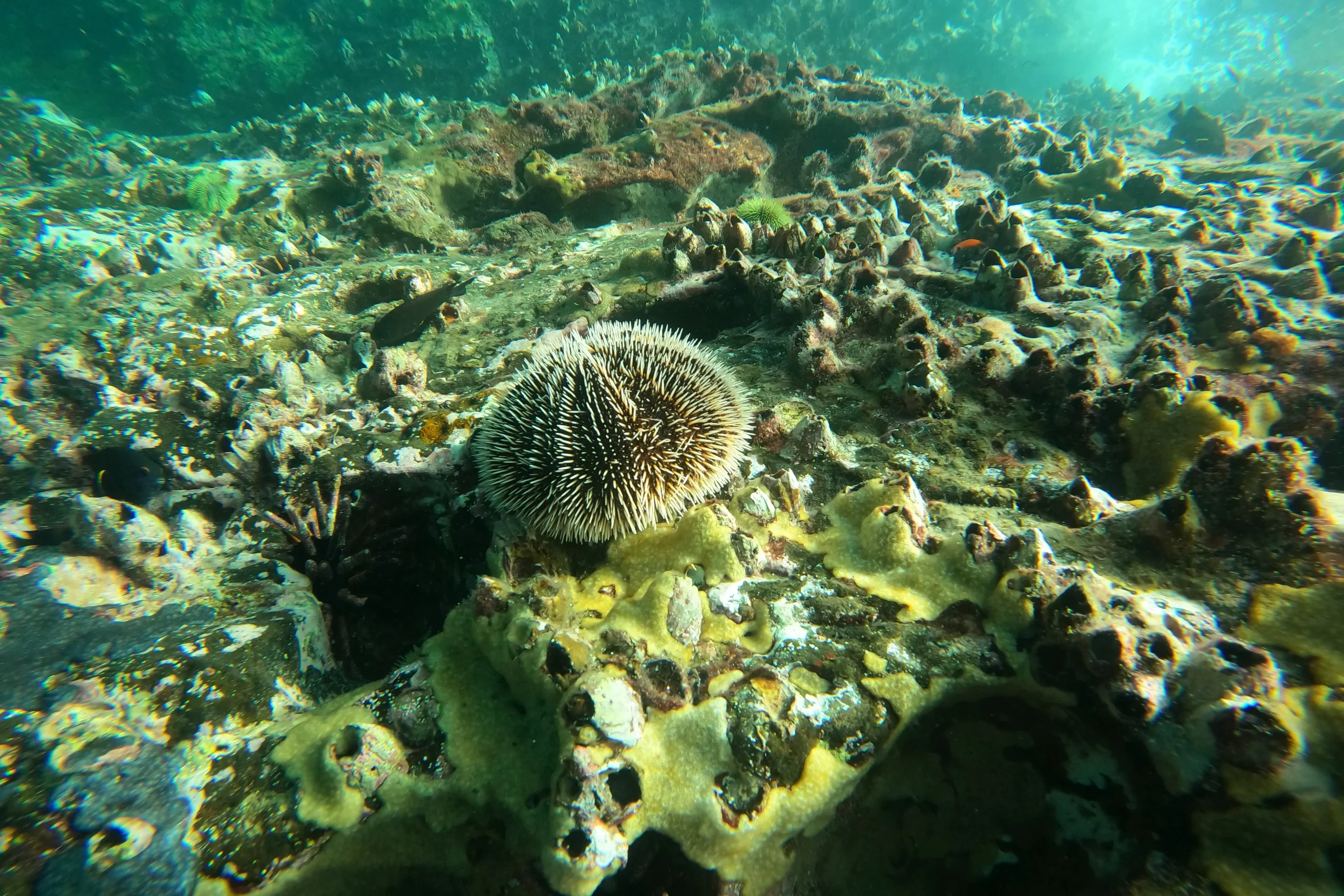
The underwater world reveals itself almost immediately. Schools of surgeonfish and creole fish move around the colorful volcanic walls, while sea anemones, barnacles, sea stars and sea grasses cover the rocks and crevices. The area is also home to the Wellington coral, a coral species that was once believed to be extinct and has only recently been rediscovered in the Galapagos.
We then enter the cave itself. As the light becomes darker and the volcanic walls surround you, sea lions may swim through the water while blacktip reef sharks can sometimes be found around the cave and its entrance. When we emerge from the cave, we follow the outline of the islet toward deeper water. Here the character of the snorkeling changes once again. The protected volcanic formations give way to the open blue, creating opportunities to encounter larger pelagic species such as manta rays and Galapagos sharks.